


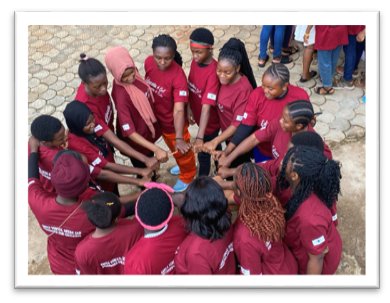
“Like a small boat on the ocean sending big waves in to motion”, is a small initiative making catalytic waves in addressing GBV concerns within grassroots communities in the Northwest Region of Cameroon. Here are some best practices to this process recorded
Change does not only begin with services it begins with shifting power. In communities where girls’ voices are often muted by deeply entrenched gender norms, the most catalytic interventions are those that deliberately transform who speaks, who decides, and who is heard.
Across many grassroots settings, adolescent girls grow up in environments where their autonomy is constrained by social expectations that position them as dependents of male authority figures. Decisions about their bodies, education, and access to sexual and reproductive health (SRH) services are frequently mediated by others. In such contexts, silence around gender-based violence (GBV) is not incidental it is structural, reinforced by stigma, fear, and lack of safe, trusted avenues for disclosure.
Addressing SRH and GBV in these settings therefore requires a shift from individual-focused interventions to community-wide, norm-transformative strategies. Evidence and practice consistently show that the most effective approaches share several catalytic elements. To do this, COMAGEND engages in the following processes;
First, creating safe and structured community dialogue platforms is essential. These spaces bring together girls, women, men, elders, and local leaders to openly examine and question harmful norms such as the idea that masculinity is tied to dominance or that reproductive health is solely a woman’s concern. When facilitated effectively, these dialogues reduce stigma, normalize conversations about SRH, and begin to dismantle the social barriers that sustain GBV.
Second, engaging men and boys as active participants not passive observers is critical. Transformative change occurs when men and boys are supported to reflect on and challenge traditional beliefs, becoming allies in promoting gender equality. This shared responsibility approach helps shift SRH from a “women’s issue” to a collective concern, while also addressing the root drivers of violence.
Third, investing in girls’ safe spaces and peer support networks provides a foundation for agency and resilience. Within these groups, girls can access accurate SRH information, build confidence, and develop the skills to articulate their needs and rights. These spaces also serve as entry points for linking girls to essential health and protection services.
Fourth, strengthening pathways to services ensures that increased awareness translates into real access. Community-based interventions must be integrated with responsive, youth-friendly SRH services and GBV response systems that are accessible, confidential, and non-judgmental. Without this link, gains in knowledge and confidence may not lead to improved outcomes.
Fifth, promoting girls’ participation in community decision-making structures is a powerful lever for sustainability. When girls and young women are included in local planning processes whether in health committees, school boards, or community forums their perspectives help shape more inclusive and responsive systems.
Join us in transforming communities and building futures and working together to create safe space for dialogue and challenge harmful norms, empower girls and young women through peer support networks, foster inclusive decision-making and amplify girls’ voices and strengthen pathways to SRH and GBV.
Finally, working through trusted local structures and leadership enhances legitimacy and uptake. Engaging community leaders, faith actors, and informal influencers helps anchor change within existing social systems, making it more likely to be accepted and sustained.
Written by Pemambu Ruth & Fai Karimatou
Edited by Lum Precious & Achem Evi

