

Imagine a room where every word spoken is bound by an unshakeable oath of safety, there is the need for revival.
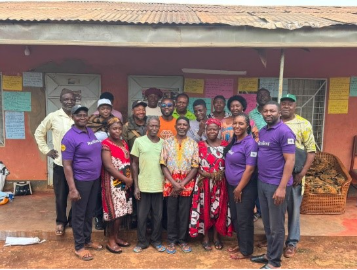
At the frontline in Ntarinkon, Nitob II, Mulang, and Ntambag community healers are at their best responding to Survivor Gender-Based Violence #SGBV response. Often times, organizations talk about frameworks, indicators, and metrics. But in that room, the metrics is flesh and blood.
Because GBV response demands strict, uncompromising confidentiality Inter Agency Minimum Standard, for instance, We cannot show you the faces of the survivors who have been helped. We cannot post their photos on a timeline. But we can take you behind the closed doors of the very people who carry these stories on their shoulders.
The Frontline Bottleneck: “But I Know You…”
For the past few weeks, our 15 trained community healers have been out in their neighborhoods, stepping into local spaces to offer Psychological First Aid (PFA) and survivor-centered care. But doing this work in your own backyard comes with a unique, heartbreaking roadblock.
During our reflection session, one healer leaned forward, her voice heavy with the reality of the streets: “They look at me, and they freeze,” she shared. “They want to speak. They need to cry. But then they remember, I am the girl from next door. I see their mother at the market. Our families share the same Njangi. They are terrified that if they give me their shame, it will leak into their daily lives.”
This is the frontline bottleneck no textbook prepares you for. In tight-knit communities, proximity is our greatest strength, but it can also be a survivor’s biggest fear. How do you convince someone to step into a “safe container” when the person holding the container is someone they see every single day as well as Sunday at church fellowship? Our healers have had to navigate this delicate boundary, constantly reassuring survivors that their oath of confidentiality is stronger than any neighbourly bond.
Underwater: When the Healer Drowns in the Story
But the roadblocks weren’t just external. As the hours passed in our evaluation room, the conversation shifted inward, and the emotional armor began to crack.
Another advocate shared how a recent case had completely consumed them. They had mastered the active listening techniques, filled out the case management forms perfectly. But when the survivor went home, the voice followed them into the dark.
“We are trained to be strong, to be the pillars,” they confessed “But some days, the stories are too heavy. You look into a survivor’s eyes, and you see your own sister, your own mother, or your past self. If we are not careful, we drown in their tears.”
Heads nodded across the room. The truth was out: our healers were experiencing secondary trauma. In their desperation to mend what was broken in others, they were fracturing themselves. It became profoundly clear that a healer cannot pour from a cup that has been shattered.
The Turning Point: “There is No Healing Without Healing”
Right there, in the middle of our conversation, the agenda shifted. We realized that this session couldn’t just be about tracking cases or auditing forms. It had to be a space for collective restoration.
We stopped analysing the community for a moment and started analyzing the room. The advocates began to share their own burdens with one another, using the very local healing traditions they had been taught, the symbolic community storytelling, the shared reflection, the deep, non-judgmental listening.
For the next hour, the healers became the survivors, and the room became their sanctuary. They reminded one another of the golden rule of the Adjust for Me project: “You equally need healing too.” To stay on track for this gruelling work, sharing their own pain wasn’t just a luxury; it was a necessity for survival.
Designing a Stronger Future
True impact in GBV work doesn’t happen on a public stage, it happens in these quiet, confidential spaces where raw honesty is permitted.
By evaluating our methods with this level of vulnerability, we are adapting our response strategy in real-time. We are sharpening our protocols to help advocates maintain healthy emotional boundaries, and we are designing peer-support systems so that no healer ever has to carry a survivor’s weight alone.
We cross this baseline together, learning from the roadblocks, protecting the privacy of our communities, and ensuring that our architecture of accountability remains robust, ethical, and deeply protective of human dignity.
To our community readers: Healing is not a straight line, and it is never the job of just one person. If you see our advocates out in Ntarinkon, Nitob II, Mulang, or Ntambag, support them, protect them, and remember that a community that knows how to heal its own is a community that wins.

